5 Aug. 2020. The IUCN SSC/WCPA Marine Mammal Protected Areas Task Force (“the Task Force”) today announces the approval of thirteen new Important Marine Mammal Areas (IMMAs) in the Extended Southern Ocean Region.
“This work will serve to shine a light on the parts of Antarctica and the Southern Ocean which are most essential for marine mammals, according to current knowledge,” said Task Force co-chair Erich Hoyt.
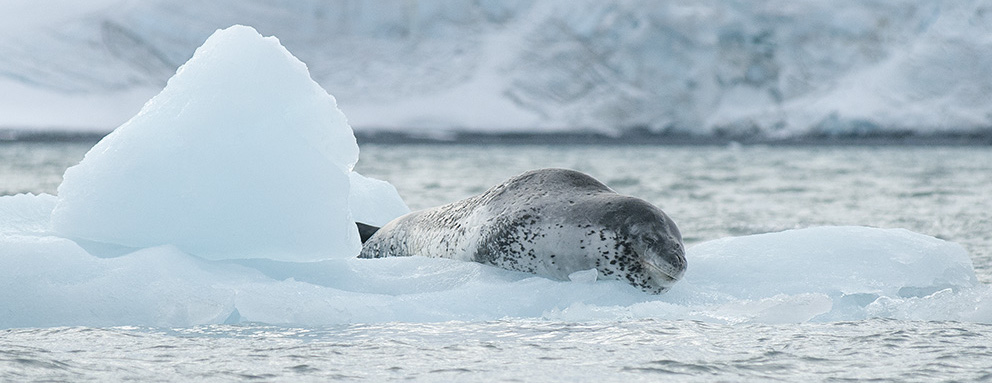
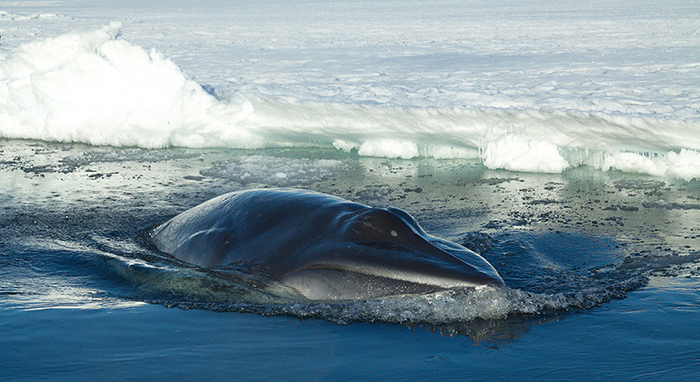
The Southern Ocean is one of the most marine mammal-rich areas in the world. The new IMMAs in the Extended Southern Ocean Region feature habitats for species such as humpback, minke, blue, southern right and fin whales, as well as crabeater, leopard, Weddell, Ross, southern fur and southern elephant seals, New Zealand sea lions and killer whales.
Hoyt continued, “The Antarctic is part of the global high seas — that immense part of the ocean outside national jurisdiction. A new international treaty is being negotiated at the United Nations to protect the high seas’ marine biodiversity.”
Important Marine Mammal Areas — IMMAs — are defined as “discrete portions of habitat, important to marine mammal species, that have the potential to be delineated and managed for conservation.” They are not marine protected areas and are determined without political or socioeconomic considerations; they are biocentric tools, the marine mammal equivalent of important bird and biodiversity areas (IBAs) devised by BirdLife International.
According to Hoyt, “IMMAs provide a method to help identify biodiversity hotspots through access to marine mammal data.”
Aurelie Spadone, IUCN Global Marine and Polar Programme, noted, “These IMMAs are the early stage toward an effective protection of marine biodiversity. IMMAs as well as marine turtle areas and important bird and biodiversity areas provide expert-based information to policy makers to answer questions on key spots in the ocean for iconic species.’’
The Task Force is mapping habitats for the 130 species of marine mammals: cetaceans, pinnipeds, sirenians, otters and the polar bear — across the world ocean.
In addition to the 13 new IMMAs, one dynamic area comprising the circumpolar ice edge around the continent, which serves as a magnet for feeding and breeding marine mammals, did not quite meet the review. It will remain as a candidate IMMA (cIMMA) while 7 other proposals will be placed on the e-Atlas as areas of interest (AoI).
“While not the endpoint in themselves,” said Yan Ropert-Coudert, Director of Research at the French National Centre for Scientific Research, “IMMAs are extremely useful for conservation bodies as they are data-driven, inter-disciplinary in essence, and an indicator of where marine mammal prey are located.”
“Bold steps for protection in the Southern Ocean are starting to be taken by nations through CCAMLR* as evidenced by the South Shetlands and Ross Sea MPAs,” said Giuseppe Notarbartolo di Sciara who co-chairs the Task Force with Erich Hoyt.
Having passed through the expert nomination and peer review process, these 13 IMMAs are now available on the IMMA e-Atlas and for use as a management tool. For cIMMAs and AoI, more supporting data will be needed before they can be reviewed again and have the chance to become IMMAs.
IMMAs can be valuable indicators of the health of the marine environment and can be used to monitor climate change.
IMMAs function as a layer highlighting important habitat for marine mammals, useful for marine spatial planning or which may lead to ship or noise directives, and the creation, revision or expansion of marine protected areas (MPAs) and other area-based management tools.
Some IMMAs are already included in protected area designations but may have different boundaries or priorities.
The Southern Ocean workshop that culminated in the approval of the 13 new IMMAs was the work of the Task Force’s IMMA Secretariat in collaboration with the main funders French Biodiversity Agency (Office Français de la Biodiversité — OFB). It was organised through the IUCN Global Marine and Polar Programme, and involved 20 scientists from 11 countries. The workshop was held in collaboration with the Scientific Committee on Antarctic Research (SCAR) and there was additional support for individual participants from the French embassy in the United States and the Chilean Environment Ministry.
* CCAMLR (the Convention on the Conservation of Antarctic Marine Living Resources) is the multilateral body dealing with potential threats to Antarctic marine ecosystems occurring as a result of increased commercial interest in Antarctic fisheries resources. Part of CCAMLR’s mandate is the creation of marine protected areas.
Background and Notes
The Southern Ocean, which surrounds the Antarctic continent, is one of the least altered marine ecosystems on Earth and holds a significant part of the biodiversity beyond national jurisdiction (BBNJ). It is home and feeding grounds to more than a quarter of the marine mammal species that roam the world’s oceans. Scientists believe that climate change and rising temperatures – which in this part of the world are occurring faster than elsewhere – are changing the balance of these ecosystems.
In 2020, IMMAs currently under review will also be announced for Australia-New Zealand and South East Indian Ocean. Later in 2020, an IMMA expert workshops will focus on the waters of the South East Tropical and Temperate Pacific Ocean. The above work is mainly supported by the Global Ocean Biodiversity Initiative through the German Government’s International Climate Initiative (GOBI-IKI).
Besides the overall GOBI-IKI support, other long-time sponsors and facilitators of the IMMA work include Tethys Research Institute, Whale and Dolphin Conservation, MAVA Foundation, and the International Committee on Marine Mammal Protected Areas. Additional sponsors for the Extended Southern Ocean IMMA work came from Fondation Prince Albert II de Monaco, the Natural Resources Defense Council (NRDC), Animal Welfare Institute (AWI) and OceanCare.
To read or download the final report of the Extended Southern Ocean region IMMAs, go here.