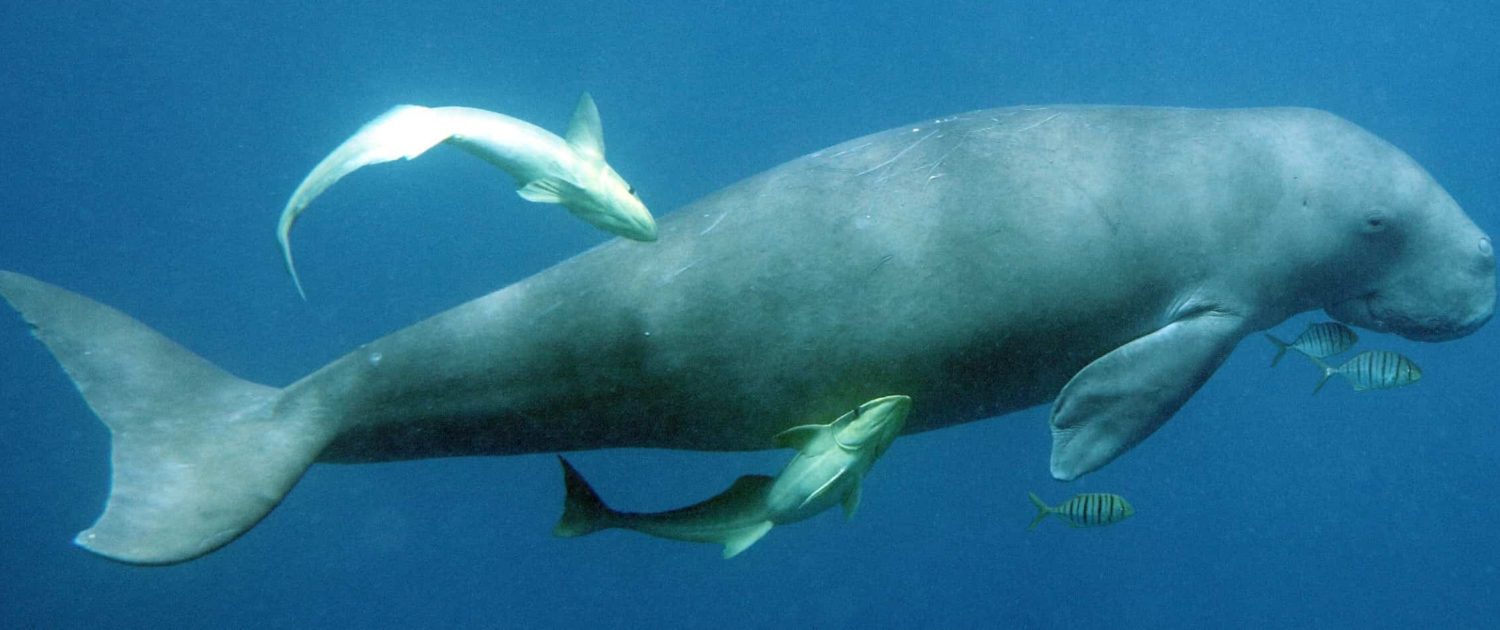
9th December 2019. Scientists have today announced the approval of 37 new Important Marine Mammal Areas, called IMMAs, in one of the more ecologically rich yet conservation challenged areas of the world ocean—the Western Indian Ocean and Arabian Seas. The new IMMAs highlight key habitats for various threatened whale and dolphin species, including endangered Indian Ocean humpback dolphins, and the threatened dugong. IMMAs are an important first step toward greater protection efforts, including in some cases the establishment of marine protected areas.
The announcement was made at the World Marine Mammal Conference, in Barcelona, by the Marine Mammal Protected Areas Task Force of the International Union for Conservation of Nature (IUCN).
One of the new IMMAs, visited by the Task Force from 17th-24th November, is the Bazaruto Archipelago to Inhambane Bay IMMA, in southern Mozambique. The Task Force held meetings to inform stakeholders and government about the new IMMA.
Task Force co-chair and Whale and Dolphin Conservation research fellow Erich Hoyt explains: “Marine mammals face enormous pressures across the globe with threats ranging from fishing practices to ship strikes and pollution. If we are to prevent species extinctions it is vital that we address the threats where these species breed, feed and live. This is where IMMAs come in — they are a crucial step in establishing the evidence base needed to create meaningful protection.”
Co-chair Giuseppe Notarbartolo di Sciara adds: “The Bazaruto Archipelago to Inhambane Bay IMMA represents the last stronghold of the dugong in East Africa. There are fewer than 300 of these extraordinary creatures here, but, unlike elsewhere along the continent’s coast, this population is at least still viable.”
These findings come from dugong research by Almeida Guissamulo, Alima Gomes, Victor Cockcroft and Ken Findlay who have worked in Mozambique for up to 30 years. The first three scientists accompanied the Task Force team.
Also joining the team in Mozambique was Donna Kwan, representing the Dugong Memorandum of Understanding of the Convention on Migratory Species of Wild Animals (CMS). Mozambique is signatory to the CMS and the Dugong agreements.
At 16,280 km2 in size, the Bazaruto Archipelago to Inhambane Bay IMMA also features habitat for endangered Indian Ocean humpback dolphins and ten other whale and dolphin species including humpback whales on their breeding grounds. This habitat is threatened by illegal gillnetting and poaching as well as proposed extractive gas & oil seismic exploration and other developments in the middle of the dugong habitat by the South Africa-based SASOL Limited. It is estimated that the dugongs can sustain only a maximum of two human-caused deaths of productive females per year before numbers crash.
IMMAs function as a layer highlighting important habitat for marine mammals valuable for marine spatial planning or which may lead to shipping or noise directives, and to the creation, revision or expansion of marine protected areas (MPAs) and other area-based management tools. Marine mammals are valuable indicators of the health of the marine environment. Thus, each IMMA can be used to monitor marine biodiversity and potentially the effects of climate change. (Image credit: News main page: Sam Lawrence and Ocean Collective Media.This page: Mandy Etpison).