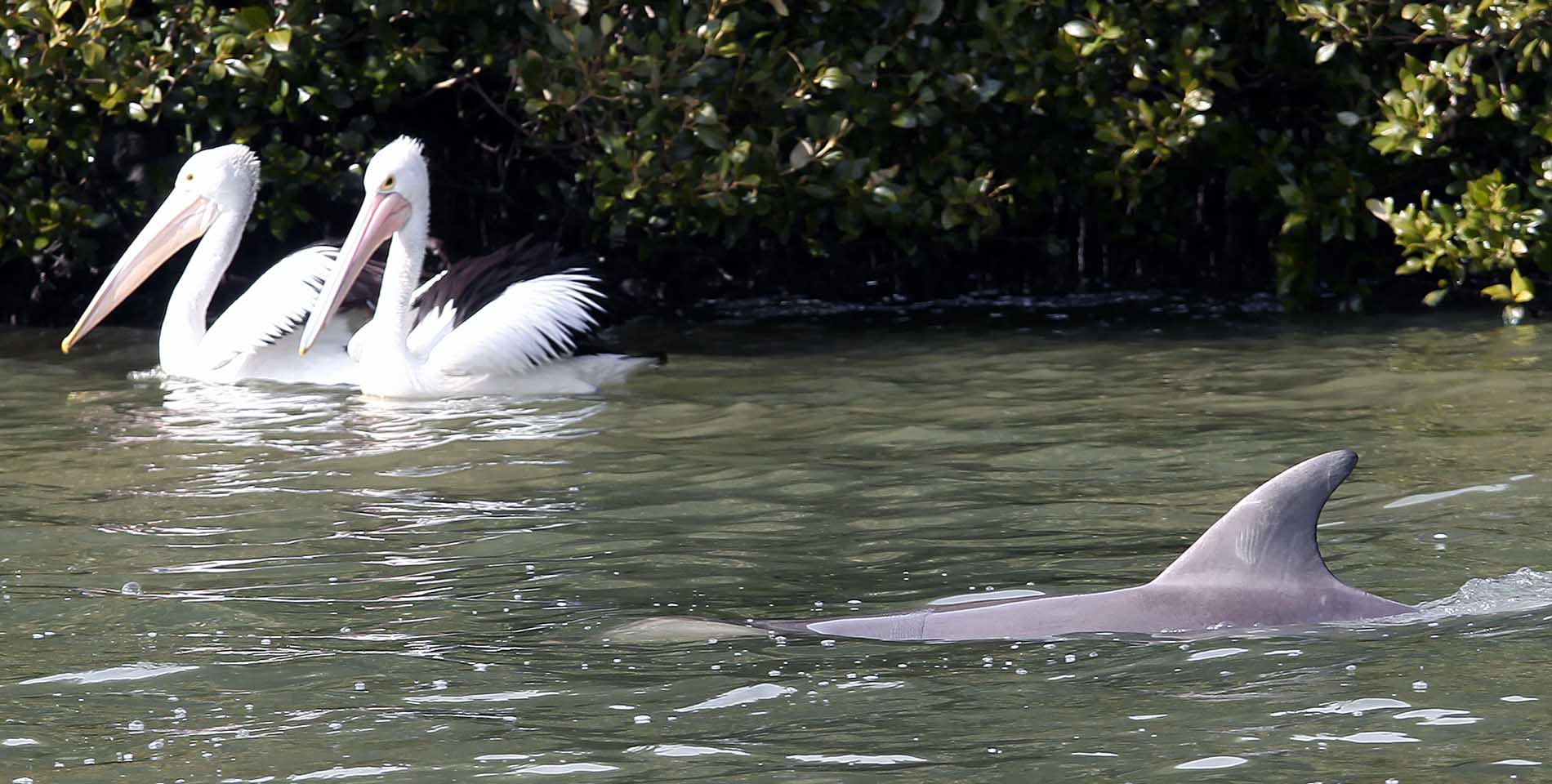
The IUCN Marine Mammal Protected Areas Task Force (“the Task Force”) this week announces the completion and placing on its e-Atlas of two more ocean regions where Important Marine Mammal Areas, or IMMAs, have been mapped, both in the Southern Hemisphere.[1]
IMMAs are discrete portions of habitat, important for marine mammal species, that have the potential to be delineated and managed for conservation. IMMAs are not marine protected areas but layers that can be used in spatial planning or for other area-based management actions.
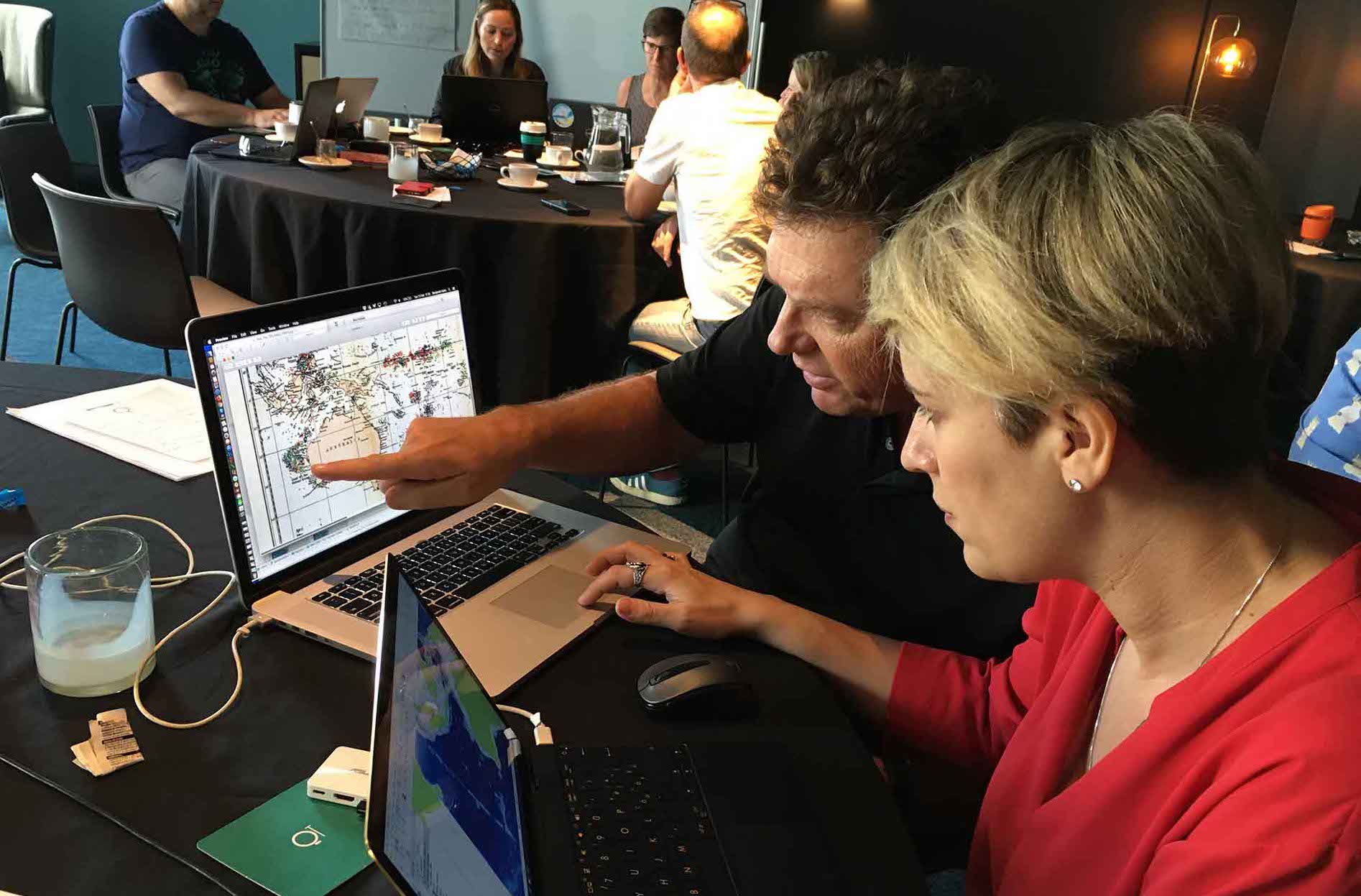
“The findings draw upon several decades of scientific work in these two regions to identify the habitats of variously threatened and endemic marine mammal species,” said Task Force co-chair Giuseppe Notarbartolo di Sciara. “It is vital that we know more about the habitats of blue whales, Australian snubfin dolphins, Australian and New Zealand sea lions, and Hector’s dolphins if we are going to save them.”
- In Australia-New Zealand and the Southeast Indian Ocean region, 31 IMMAs have passed peer review with 2 candidate IMMAs (cIMMAs) and 13 areas of interest (AoI) being put on the e-Atlas for monitoring and further research. This work and most of the previous region efforts 2016-2020 have been sponsored by Germany’s International Climate Initiative (IKI) through the Global Ocean Biodiversity Initiative (GOBI).
- In the Extended Southern Ocean, in work largely sponsored by the French Biodiversity Agency through the IUCN Global and Polar Marine Programme, 13 IMMAs have been identified, along with 1 cIMMA and 7 AoI.
In total, 159 IMMAs now cover the e-Atlas across most of the southern hemisphere and parts of the northern hemisphere. In addition, 24 areas remain as cIMMAs and 128 are listed as AoI. Both cIMMAs and AoI are seen as potential future IMMAs.
“We’ve now covered a third of the world ocean,” said Task Force co-chair Erich Hoyt. “The gaps are mainly in the high seas—that and putting IMMAs across the Northern Hemisphere will comprise most of our work over the next few years.”
“These new IMMAs put a critical spotlight on the need for stronger marine conservation efforts in Australia, New Zealand and the Southern Ocean,” said Chris Johnson, Global Lead for cetacean conservation for World Wide Fund for Nature (WWF), who also participated in the Australia-NZ IMMA workshop. “Increased ship traffic, entanglement in fishing gear and climate change are threats impacting cetaceans in the region that all benefit by greater protection of their most critical habitats. This work demonstrates the urgency to expand protected area networks now to safeguard species for years to come.”
Recent demonstrations of how IMMAs are being implemented include:
- Contributions toward the creation of MPAs in Bangladesh leading to the June 2019 declaration of the Nijhum Dwip MPA and National Park.
- In Mozambique, in May 2020 the South African SASOL company relinquished two oil & gas blocks in key habitat following its identification as the Bazaruto Archipelago to Inhambane Bay IMMA, home to the last viable African dugong population.
- In East Kalimantan, Indonesia, a long-term study helped identify Balikpapan Bay as an IMMA and this declaration coincided with the coastal zonation plans being put forward, giving international attention to protect this habitat for endangered Irrawaddy dolphins.
- The International Whaling Commission is addressing the threat to whales derived by ship strikes by examining IMMAs for large whales.
- IMMA scientific workshops have utilised ecologically or biologically significant areas (EBSAs) from the Convention on Biological Diversity and led to the identifications of more than 25 IUCN key biodiversity areas (KBAs).
- The U.S. Navy has identified IMMAs as Offshore Biologically Important Areas relevant to the mitigation of disturbance and mortality from sonar testing.
- The International Maritime Organisation (IMO) has expressed interest in considering speed restrictions and traffic separation schemes in IMMAs where marine mammal populations are sensitive to noise or face the risk of collisions.
- Up to early 2020, the Task Force had received 78 requests for IMMA shapefiles and metadata. Such requests are not proof of use by the diverse stakeholders, but they indicate potential conservation action even far beyond the items listed above.
IMMAs were formally recognised by the Parties to the Convention on Migratory Species, by adopting a resolution endorsing them at their 12th meeting in Manila, the Philippines, in 2017.
The Task Force has adopted as its mandate the mapping of habitats for the 130 species of marine mammals—cetaceans, pinnipeds, sirenians, otters and the polar bear—across the world ocean. The work has been largely sponsored by the Global Ocean Biodiversity Initiative through the German Government’s International Climate Initiative (GOBI-IKI), with substantial contributions from the French Biodiversity Agency, MAVA Foundation, Whale and Dolphin Conservation and Tethys Research Institute.
Other sponsors include the Fondation Prince Albert II de Monaco, the Natural Resources Defense Council (NRDC), Animal Welfare Institute (AWI), OceanCare and International Committee on Marine Mammal Protected Areas.
For more information, contact details and photos, download the full news release here.
[1] You can learn more about IMMAs and the ways they’re being used for conservation in an IMMA Webinar, Wednesday, 28th October at 14:00 GMT. For more information and links, go to www.gobi.org/webinars.



 © N. Shumeyko 2019