• Home
  • IMMAs
    • IMMA Selection Criteria
    • IMMA Identification Process
    • IMMA definitions
    • FAQ on IMMAs
    • IMMA citations
    • Regional IMMA workshops
      • Mediterranean Sea
      • Pacific Islands
      • North East Indian Ocean and South East Asian Seas
      • Extended Southern Ocean
      • Western Indian Ocean and Arabian Seas
      • Australia-New Zealand and South East Indian Ocean
      • Black Sea, Turkish Straits System and Caspian Sea
      • South East Tropical and Temperate Pacific Ocean
      • South West Atlantic Ocean Region
      • North East Atlantic Ocean Region
      • North West Atlantic Ocean and Wider Caribbean
    • Current IMMAs Summary
    • IMMAs Searchable Database
    • IMMAs Description and Fact Sheets
    • IMMA Spatial Layer Download
    • Regional Groups
    • How can IMMAs be used?
  • IMMA e-Atlas
  • IMMA Specialist Group
    • Mission
    • Task Force Members
    • Supporting organisations
    • Partner organisations
    • Activities
      • Panorama Solutions
      • Geospatial Genetics to Identify IMMAs
      • Geospatial Analysis of Threats
    • ICMMPA
  • Resources
    • Documents
    • IMMA Handbook
    • IMMA citations guidance
    • IMMA Spatial Layer Download
    • IMMA – Area Submission
  • Contacts
  • News
  • Menu Menu

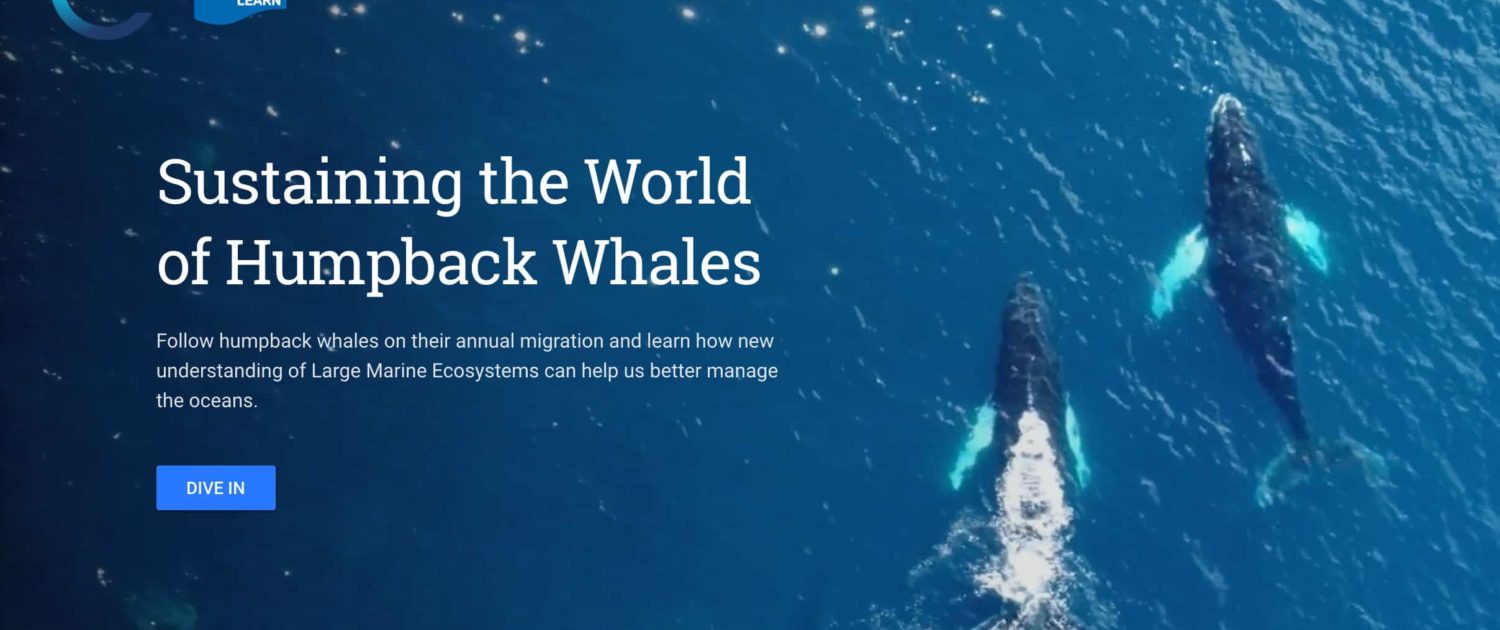
Humpback Whale migration on Google Earth’s Voyager Story

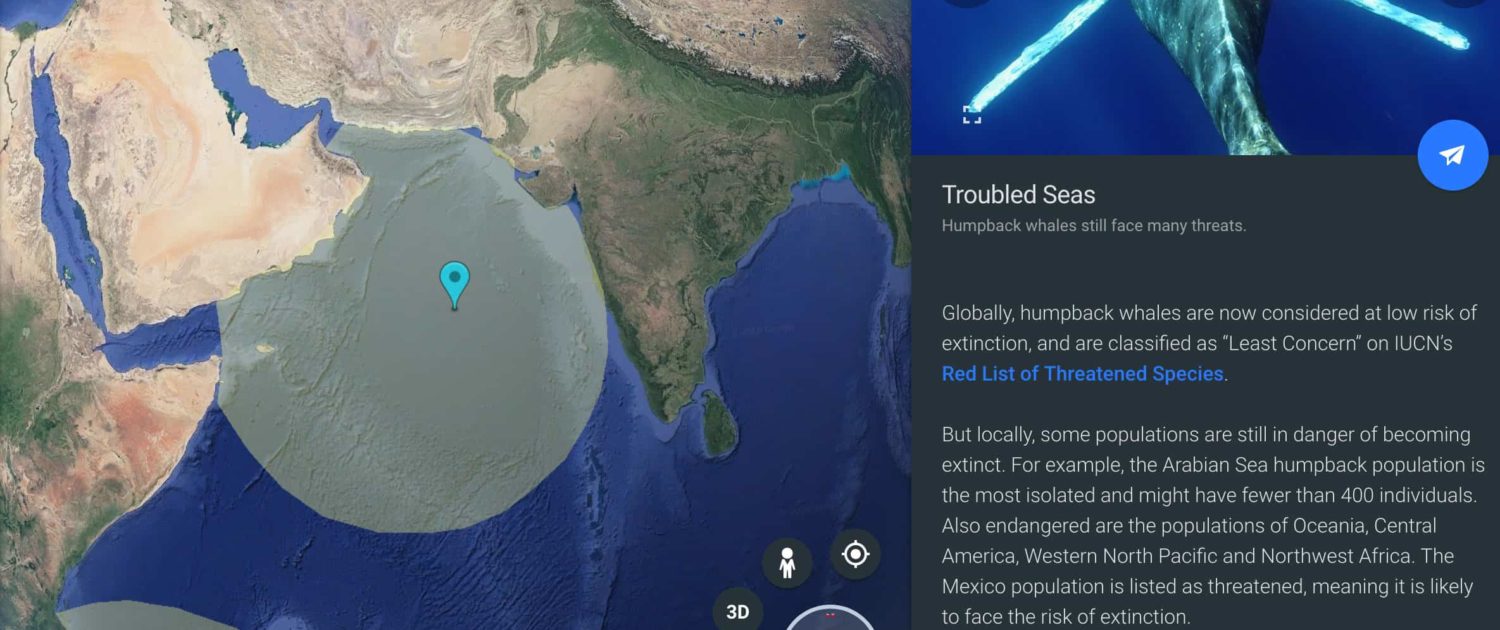
The IUCN Marine Mammal Protected Areas Task Force has collaborated with Google Earth to produce a Voyager story to illustrate the world of Large Marine Ecosystems (LMEs) in the context of humpback whale migration. The project was completed for release on World Oceans Day on the 8thof June 2018. The animation is best viewed on Google Chrome and shows various areas where the IMMA Secretariat of the Task Force has been working on IMMAs as part of a GOBI-IKI project with Tethys Research Institute and Eulabor.
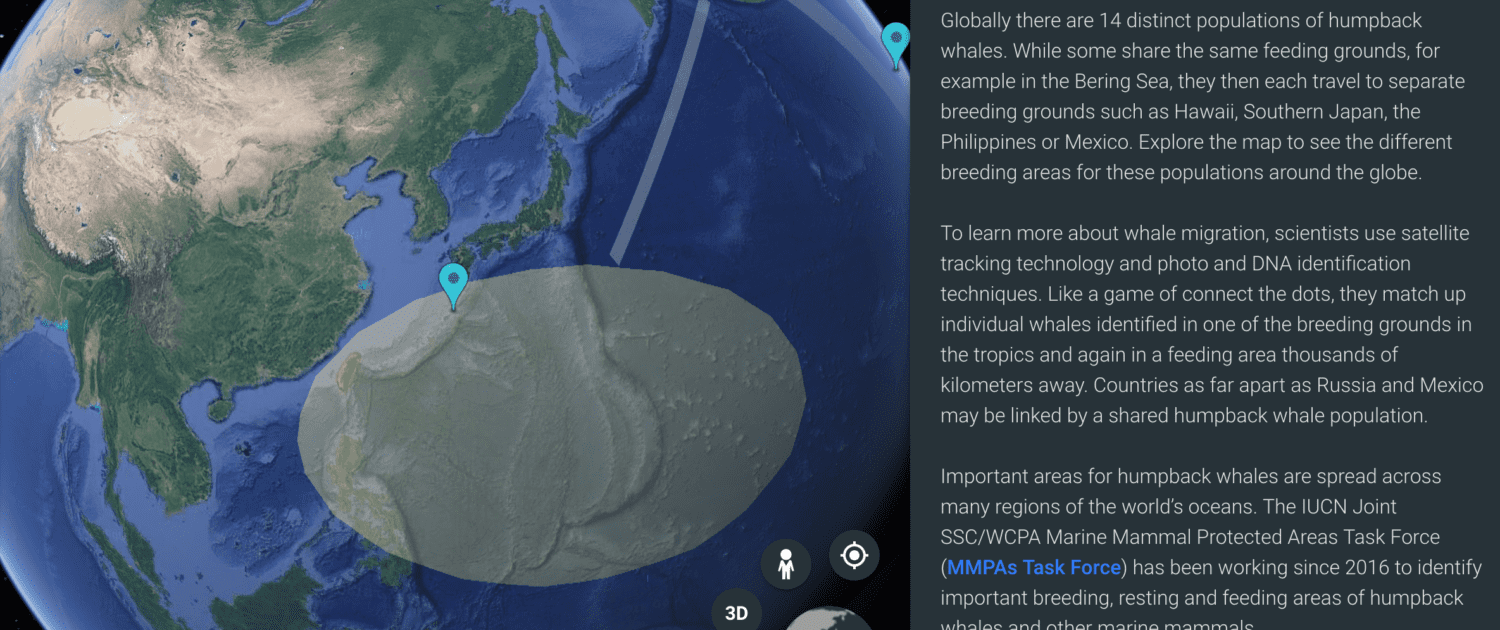
Task Force close collaborators are also mentioned in the Voyager story and associated materials, including Whale and Dolphin Conservation with its work with the Russian Cetacean Habitat Project, NOAA and its work in the Hawaiian Islands Humpback Whale National Marine Sanctuary, the Southern Ocean Research Partnership, Balyena, and others.

For more information, click here.
Categories

Older news

Privacy Policy Cookie Policy
This website runs on green hosting - verified by thegreenwebfoundation.org

Partners

IUCN World Commission on Protected Areas (WCPA)
IUCN Species Survival Commission (SSC)
International Committee on Marine Mammal Protected Areas (ICMMPA)
Tethys Research Institute
Whale and Dolphin Conservation (WDC)
Global Ocean Biodiversity Initiative (GOBI)
Office français de la biodiversité

Follow us

@copyright 2016-2020 - Marine Mammal Protected Areas Task Force - Web Design: Elena Politi - Graphic: Massimo Demma
Link to: Overlapping ship traffic and noise and Important Marine Mammal Areas (IMMAs) across the Mediterranean Sea Link to: Overlapping ship traffic and noise and Important Marine Mammal Areas (IMMAs) across the Mediterranean Sea Overlapping ship traffic and noise and Important Marine Mammal Areas (IMMAs)... Link to: High Seas International Conference Considers IMMAs as a Key Spatial Tool Link to: High Seas International Conference Considers IMMAs as a Key Spatial Tool High Seas International Conference Considers IMMAs as a Key Spatial Tool
Scroll to top

Loading...